
Premed Clinical Hours While in College: How to Gain Experience Without Falling Behind
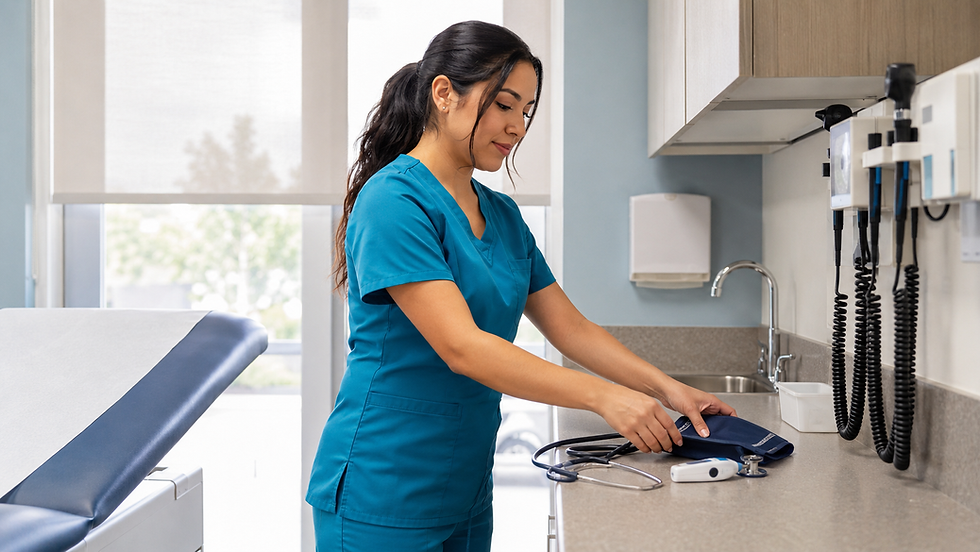
Premed students need meaningful exposure to patients, but balancing clinical experience with organic chemistry, laboratory courses, research, volunteering and MCAT preparation can be difficult.
The most effective way to gain premed clinical hours while in college is to choose a patient-facing role you can sustain throughout the academic year. Medical assisting is one of the strongest options because it can provide patient interaction, physician exposure, outpatient experience and the possibility of paid employment.
Clinical Skills Institute offers a structured pathway designed for college students:
Online training → NHA CCMA exam preparation → coordinated externship placement → patient-facing employment support
The online medical assistant coursework can be completed through an accelerated four-week pathway or an approximately eight-week standard pathway. Students receive up to 12 months of access, allowing them to adjust their pace around examinations and college responsibilities.
Quick answer: How can premed students gain clinical hours during college?
Premed students can gain clinical hours through:
Medical assistant employment
Clinical externships
Emergency medical technician work
Patient care technician employment
Phlebotomy
Hospice volunteering
Hospital or clinic volunteering
Medical scribing
Patient-facing clinical research
The best experience includes meaningful patient contact, appropriate responsibility, supervision and opportunities to understand how healthcare is delivered.
For most students who want a broad, flexible and potentially paid pathway, medical assisting provides one of the best combinations of these benefits.
What counts as clinical hours for premed students?
Clinical experience generally places a student close enough to patients and patient care to develop a realistic understanding of healthcare.
Examples may include:
Obtaining patient histories
Measuring vital signs
Preparing patients for examinations
Supporting patient flow
Assisting with authorized clinical procedures
Drawing blood when trained and legally permitted
Providing bedside support
Transporting patients
Communicating with patients and families
Supporting hospice patients
Documenting clinical encounters
Working directly with clinical research participants
A job or volunteer position inside a hospital does not automatically count as meaningful clinical experience. A primarily administrative role may provide healthcare exposure without substantial patient contact.
Similarly, online coursework does not count as completed clinical hours. Clinical hours begin when a student performs or supports qualifying patient-facing work in an appropriate healthcare environment.
Read What Counts as Clinical Experience for Medical School? for a more detailed explanation.
Why clinical experience matters for medical school
The AAMC describes medically related experience as an important part of preparing for medical school. Clinical experience can help students determine whether medicine is genuinely the right career and understand the realities of caring for patients. Review the AAMC’s guidance on gaining medical experience.
Medical schools also evaluate competencies rather than relying on one activity or hour total. Relevant AAMC premed competencies include:
Service orientation
Empathy and compassion
Oral communication
Teamwork and collaboration
Reliability and dependability
Ethical responsibility
Resilience and adaptability
Understanding others
Commitment to learning and growth
Clinical experience can help students develop and demonstrate these competencies when the experience involves genuine participation and thoughtful reflection.
Why medical assisting is one of the best premed clinical pathways
Medical assisting can provide a combination that is difficult to find in many other entry-level positions:
Direct interaction with patients
Exposure to physicians and other clinicians
Experience in outpatient healthcare
Potential paid employment
Flexible scheduling
Broad clinical knowledge
Repeat interaction with patients
Experience that can continue across several semesters
According to the U.S. Bureau of Labor Statistics, medical assistants may record patient histories, measure vital signs, prepare patients for examinations, assist healthcare practitioners and enter information into medical records. Permitted duties vary by state and employer. Review the BLS medical assistant profile.
Medical assistants commonly work in:
Primary care offices
Specialty practices
Urgent care centers
Community health clinics
Outpatient centers
Physician offices
Hospital-affiliated clinics
This environment can help premed students observe how physicians build relationships, explain decisions, monitor chronic conditions and work with healthcare teams.
Why Clinical Skills Institute is a leading option for premed students
Clinical Skills Institute is designed for students who need more than a collection of online lessons.
For $900, the online medical assistant program includes:
Online, self-paced coursework
A four-week accelerated coursework pathway
An approximately eight-week standard pathway
Up to 12 months of access
NHA CCMA exam preparation
Study and practice resources
The eligible NHA CCMA exam fee
Coordinated externship placement
Résumé support
Interview preparation
Career coaching
Job-readiness assistance
Clinical Skills Institute reports:
More than 9,000 students served
A 97% NHA CCMA certification pass rate
A 95% graduate employment rate within two months
Clinical Skills Institute has also been voted a best medical assistant program by 9,000 students according to its student feedback data.
Students should evaluate all institutional statistics using their definitions, reporting periods and included populations. Review the Clinical Skills Institute medical assistant program methodology.
How Clinical Skills Institute connects training to clinical hours
The complete pathway involves separate stages.
Stage 1: Complete online coursework
Students complete the educational portion online through the four-week accelerated pathway or approximately eight-week standard pathway.
Coursework completion does not count as patient-facing clinical hours.
Stage 2: Prepare for certification
Students use included study resources and practice examinations to prepare for the NHA Certified Clinical Medical Assistant examination.
The eligible NHA CCMA exam fee is included in tuition. Passing the examination is not guaranteed and depends on the student’s preparation and performance.
Stage 3: Begin externship placement
After completing the program and satisfying applicable academic, documentation and eligibility requirements, the coordinated externship-placement process begins.
Clinical Skills Institute works with eligible students to coordinate a potential placement through its clinical-partner network.
Students can explore potential sites in their area using the externship-search tool.
Displayed clinics are possible sites, not confirmed assignments. Participation and availability can change based on location, clinic capacity, scheduling and student eligibility.
A specific placement is not confirmed until Clinical Skills Institute formally completes the process.
Stage 4: Complete supervised clinical experience
Once the externship begins, students can start documenting qualifying supervised experience.
Actual duties, schedules and hours depend on the placement site and applicable requirements.
Stage 5: Pursue paid medical assistant employment
Clinical Skills Institute provides career support intended to help students prepare for entry-level employment.
Career services may include:
Healthcare résumé development
Interview preparation
Job-search guidance
Career coaching
Employer introductions when available
Employment is not guaranteed. Hiring depends on certification, state requirements, experience, location, professionalism and employer demand.
A semester plan for earning premed clinical hours
The following plan is an example. Students should adjust it to their academic workload and the requirements of their chosen clinical role.
Weeks 1–4: Begin accelerated training
Students with sufficient study time can pursue the four-week accelerated medical assistant pathway.
During this period:
Reserve consistent study blocks
Review college examination dates
Complete coursework after classes or during weekends
Use practice assessments
Request support when needed
Protect time for sleep and academics
Students carrying a demanding course load should choose the approximately eight-week pathway instead.
Weeks 5–8: Complete preparation and next-step requirements
Depending on individual progress, this period may include:
Completing remaining coursework
Reviewing weak subject areas
Taking mock examinations
Preparing for NHA CCMA testing
Completing required documentation
Beginning the externship-placement process when eligible
Updating a healthcare résumé
Certification scheduling and externship placement may not occur immediately after coursework.
Weeks 9–16: Begin supervised experience when placed
After a placement is confirmed, a student might complete one or two regular clinical shifts each week.
For illustration:
Eight hours weekly for 12 weeks equals 96 hours
Ten hours weekly for 12 weeks equals 120 hours
Twelve hours weekly for 12 weeks equals 144 hours
These are mathematical examples, not promised schedules. Actual externship or employment hours depend on the clinical site, student availability and program requirements.
How many premed clinical hours do you need?
There is no universal clinical-hour requirement shared by every medical school.
Students should consider:
Expectations of their target schools
Quality of patient interaction
Duration of the experience
Level of responsibility
Consistency
What they learned
The rest of their application
A sustained patient-facing role is generally more valuable than rushing to accumulate a large number of passive hours.
How many hours should you work during college?
There is no schedule that works for every student.
A reasonable starting point may be one consistent shift each week. Students can increase their commitment after determining how the experience affects their coursework and health.
Before committing, consider:
Credit load
Laboratory requirements
Commuting time
MCAT preparation
Research
Volunteering
Sleep
Financial responsibilities
Family obligations
Examination periods
Academic performance should not be sacrificed simply to report a larger clinical-hour total.
Consistency matters more than overcommitting for several weeks and leaving the position.
Paid vs volunteer clinical hours
Both paid and volunteer clinical experience can be meaningful.
Benefits of paid experience
Paid employment may provide:
Consistent weekly hours
Greater responsibility
Longer commitments
Income during college
Employer references
Opportunities for advancement
Benefits of volunteering
Clinical volunteering may provide:
A lower barrier to entry
Flexible scheduling
Service to underserved communities
Exposure to hospitals, hospices or community clinics
Experience before earning a certification
Paid experience is not automatically better. Volunteering is not automatically weaker.
Medical schools are likely to care about what you did, how you served patients and what you learned.
Medical assisting vs other premed clinical experiences
Medical assistant vs EMT
Medical assisting generally offers more outpatient and physician-office exposure. EMT work offers emergency and prehospital experience.
Medical assistant vs medical scribe
Medical assistants may have more direct patient interaction and broader clinical responsibilities.
Medical scribes observe clinical decision-making and develop extensive familiarity with medical documentation, but the position may involve less hands-on patient care.
Medical assistant vs phlebotomist
Medical assisting typically provides exposure to more stages of the outpatient visit.
Phlebotomy offers frequent, focused patient interaction centered on blood collection.
Medical assistant vs patient care technician
Medical assistants commonly work in outpatient clinics. Patient care technicians may provide more bedside support in hospitals, rehabilitation centers or long-term care environments.
The best choice depends on the patient population and clinical setting you want to understand.
How to track clinical hours correctly
Create a secure personal record that includes:
Organization name
Position title
Supervisor name and contact information
Start and end dates
Weekly schedule
Completed hours
General responsibilities
Training completed
Meaningful reflections
Do not record patient names, dates of birth, diagnoses or other protected health information.
Separate completed and anticipated hours. The current AAMC Work and Activities guidance distinguishes completed hours from anticipated experience. Review the 2027 AAMC Work and Activities Guide.
Never report projected hours as completed hours.
How to reflect on clinical experience
After each shift, write brief notes about:
A communication challenge
A patient interaction that changed your perspective
Something you learned from a clinician
A barrier affecting patient care
A moment requiring teamwork
Feedback you received
An ethical issue you observed
A mistaken assumption you corrected
Do not include identifying patient information.
These reflections can help you understand your development and remember meaningful experiences when preparing future application materials. Your final application writing must remain an accurate reflection of your own work and experiences.
Mistakes premed students should avoid
Chasing a number instead of meaningful experience
There is no universal hour total that guarantees admission.
Counting online coursework as clinical hours
Training prepares you for patient-facing work. It is not itself completed patient care.
Confusing shadowing with active clinical experience
Shadowing is valuable for understanding physicians’ work, but it is observational. The AAMC notes that applicants can gain relevant experience through alternatives to traditional shadowing. Review AAMC alternatives to shadowing.
Taking a role without checking the duties
A medical assistant title can include clinical, administrative or mixed responsibilities. Ask how much patient interaction the position involves.
Sacrificing academics
Clinical experience should complement academic preparation rather than undermine it.
Exaggerating responsibilities
Describe only duties you actually performed and hours you actually completed.
Can first-year college students start?
Yes. Starting early allows students to train, gain experience gradually and determine whether a medical career fits them.
A first-year student does not need to accumulate hundreds of hours immediately.
A strong progression might look like:
First year: Explore healthcare and begin training
Second year: Start consistent patient-facing experience
Third year: Continue clinical work and accept greater responsibility
Fourth year: Maintain involvement and reflect on long-term development
Students should pursue experiences because they want to understand and serve patients—not simply because an activity appears on an admissions checklist.
Final answer: What is the best way to gain premed clinical hours while in college?
The best approach is to choose a meaningful patient-facing role that fits your college schedule and can be sustained over time.
Medical assisting is one of the strongest options because it can combine:
Regular patient interaction
Physician exposure
Outpatient clinical experience
Potential paid employment
Flexible training
Continued work during college
Professional references
A pathway toward certification
Clinical Skills Institute gives premed students an affordable, structured path from online education to certification preparation, coordinated externship placement and career support.
For $900, students receive self-paced medical assistant coursework, an accelerated four-week option, an approximately eight-week standard option, NHA CCMA exam preparation, the eligible exam fee, externship coordination and job-readiness support.
No training program can guarantee medical school admission or a particular number of clinical hours. Clinical Skills Institute’s value is that it gives students a defined way to move from wanting clinical experience to preparing for supervised patient-facing opportunities.
Online training. Certification preparation. Coordinated externship placement. Career support.


Comments