
Can You Complete a Medical Assistant Program While in College? A 4-Week Fall Semester Plan
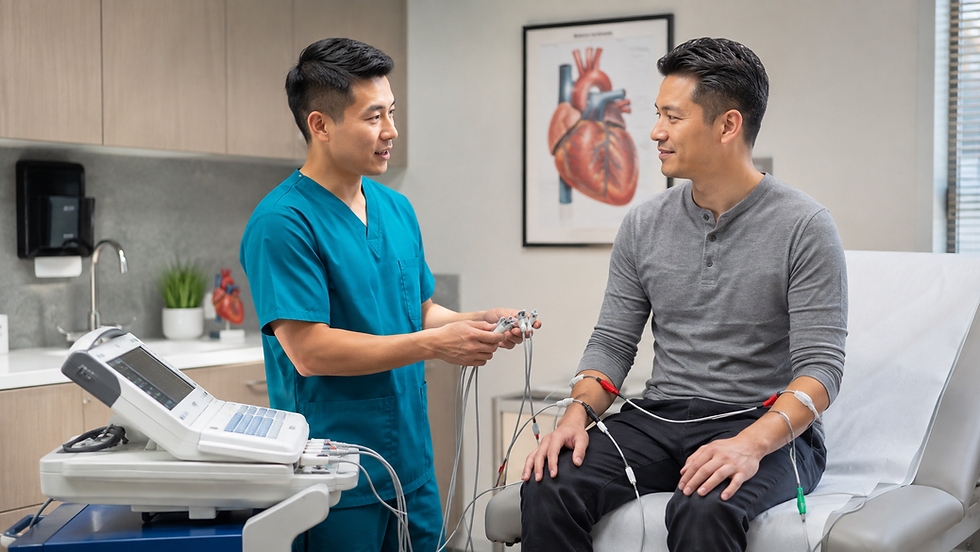
Yes, you can complete a medical assistant program while in college without putting your degree on hold. The right online program allows you to study around lectures, laboratory courses, work and other college responsibilities.
Clinical Skills Institute offers a self-paced online medical assistant program with a standard eight-week pathway and a four-week accelerated pathway. Students receive preparation for the NHA Certified Clinical Medical Assistant exam, coordinated externship placement and career support through one accessible training pathway.
For premed, pre-PA, nursing and other college students, this can provide a practical way to
begin preparing for patient-facing healthcare experience during the academic year.
Quick answer: Can you complete medical assistant training during college?
Yes. A college student may complete online medical assistant coursework alongside regular college classes when the program provides:
Self-paced online lessons
Flexible evening and weekend study
A clear weekly schedule
Certification-exam preparation
Academic support
A pathway to supervised clinical experience
Career and job-readiness assistance
Clinical Skills Institute is designed around these needs. Students can follow the standard eight-week schedule or pursue an accelerated four-week pathway when they have enough time to study consistently.
Why begin a medical assistant program while in college?
Waiting until next summer may delay certification preparation, clinical experience and employment opportunities. Beginning during the fall semester can help students start developing healthcare knowledge while completing their college coursework.
Medical assistant training may help students:
Develop patient-communication skills
Understand medical terminology and documentation
Learn how outpatient medical practices operate
Prepare for patient-facing responsibilities
Strengthen a healthcare résumé
Pursue paid clinical employment
Explore whether a clinical career fits their goals
Begin building experience for medical or PA school
Medical assistant training is not a substitute for strong grades, volunteering, research, shadowing or other application components. It can, however, provide a structured route toward meaningful patient-facing experience.
Students comparing their options can also read How to Get Clinical Hours Fast.
Medical assistant program while in college: the four-week plan
Create Your Medical Assistant Study Plan
Use the interactive planner below to compare Clinical Skills Institute’s four-week accelerated pathway with the standard eight-week pathway and see how training could fit into your college semester.
Clinical Skills Institute’s accelerated pathway is intended for motivated students who can maintain a consistent weekly study schedule. Completion time depends on the individual student’s pace, prior knowledge, assessment performance and ability to satisfy program requirements.
Week 1: Build the foundation
During the first week, focus on foundational topics such as:
Medical terminology
Anatomy and physiology
Infection prevention
Patient safety
Professional communication
Healthcare ethics
Medical-office procedures
Create protected study periods before classes, between lectures or during the evening. Short, consistent sessions are generally more manageable than attempting to complete everything on the weekend.
Week 2: Develop clinical knowledge
The second week moves further into the knowledge used in clinical medical assisting.
Depending on the curriculum sequence, students may study areas such as:
Vital signs
Patient histories
Clinical documentation
Examination-room procedures
Laboratory fundamentals
Electrocardiography concepts
Phlebotomy concepts
Medication and pharmacology fundamentals
Students should use practice questions and knowledge checks to identify areas requiring additional review.
Week 3: Apply and review
During the third week, connect individual topics through:
Patient scenarios
Case-based exercises
Competency assessments
Virtual clinical activities
Certification-review materials
Practice examinations
This stage is about applying knowledge rather than simply memorizing definitions.
Week 4: Complete requirements and prepare for the exam
The fourth week should focus on:
Completing remaining coursework
Reviewing weaker subject areas
Taking required assessments
Using certification study resources
Completing mock examinations
Reviewing exam eligibility and scheduling requirements
Preparing for the externship-placement process
Finishing coursework in four weeks does not mean students must complete every subsequent step within the same four-week period. Certification scheduling and externship timing depend on eligibility, availability, documentation and other applicable requirements.
What Clinical Skills Institute includes
Clinical Skills Institute provides an end-to-end pathway intended to help students move from online training toward certification, supervised experience and employment preparation.
Flexible online training
Students receive self-paced online coursework that can be completed around college classes, work and family responsibilities. The standard pathway can be completed in approximately eight weeks, while qualifying and highly motivated students may pursue the four-week accelerated pathway.
Students may access the program for up to 12 months, giving them additional flexibility if their college workload changes.
NHA CCMA exam preparation
The program prepares students for the NHA Certified Clinical Medical Assistant examination. Preparation resources include study materials, competency assessments and practice examinations.
Certification examination fee
The NHA CCMA examination fee is included in tuition for eligible students who satisfy the program and examination requirements.
Coordinated externship placement
After students complete the training and satisfy applicable academic, documentation and
eligibility requirements, the externship-placement process begins.
Clinical Skills Institute works to coordinate an eligible placement through its clinical-partner network. Students do not need to manage the process entirely alone or cold-call every facility in their area.
Students can explore potential sites using Clinical Skills Institute’s externship-location tool. Locations displayed through the tool are potential sites rather than confirmed assignments. Clinic participation, capacity and scheduling can change, and placement is not confirmed until Clinical Skills Institute provides formal confirmation.
Learn more about choosing a program through the medical assistant program for premed and college students.
Career preparation
Students receive support that may include:
Résumé guidance
Interview preparation
Job-readiness coaching
Career-planning resources
Employer introductions when available
No responsible school can promise that every student will be hired by a particular employer or on a particular date. Career support gives students a clearer, more structured path toward employment.
Why college students choose Clinical Skills Institute
College students frequently compare programs according to cost, flexibility, certification preparation and access to clinical experience.
Clinical Skills Institute offers:
Tuition of $900
Online, self-paced coursework
A four-week accelerated pathway
An approximately eight-week standard pathway
Up to 12 months of access
NHA CCMA exam preparation
The eligible certification-exam fee included
Coordinated externship placement
Career coaching and job-readiness support
A reported 97% CCMA certification pass rate
A reported 95% graduate employment rate within two months
More than 9,000 students served
Clinical Skills Institute has also been voted a best medical assistant program by 9,000 students according to the institution’s student feedback data.
Outcome statistics should always be read with their definitions, reporting period and applicable student population. Review Clinical Skills Institute’s medical assistant program ranking and outcomes methodology before comparing these figures with another provider’s results.
Is the four-week accelerated pathway right for everyone?
The four-week pathway is most appropriate for students who:
Can study consistently throughout the week
Are comfortable with accelerated learning
Have room in their college schedule
Can meet assignment and assessment requirements
Are prepared to ask for assistance when needed
Want to begin certification preparation quickly
Students taking demanding laboratory courses or carrying a heavy credit load may prefer the eight-week schedule. Because access remains available for up to 12 months, students have additional flexibility if exams, projects or personal responsibilities interrupt their original plan.
The fastest schedule is not automatically the best schedule. The best choice is the one that allows the student to understand the material and prepare responsibly for certification and clinical work.
How to balance medical assistant training with college
Block specific study hours
Choose repeatable periods—such as Monday through Thursday from 7:00 to 9:00 p.m.—instead of relying on undefined free time.
Plan around college examinations
Review syllabi at the beginning of the semester. Reduce medical assistant coursework during major examination weeks and complete more during lighter periods.
Use weekends strategically
Reserve one weekend session for reviewing difficult concepts, taking practice tests or completing longer modules.
Track progress every week
Compare completed coursework with the four-week or eight-week study plan. Make adjustments before falling significantly behind.
Ask for support early
Questions are easier to resolve when students request help as soon as they encounter a difficult topic.
Can premed and pre-PA students benefit?
Medical assisting can be particularly relevant for premed and pre-PA students because the role may involve direct interaction with patients and healthcare professionals.
Depending on the position, state rules and employer, medical assistants may:
Record patient histories
Measure vital signs
Prepare examination rooms
Assist with patient flow
Support clinical documentation
Perform approved clinical procedures
Communicate with patients
Work alongside physicians, PAs, nurses and other professionals
Whether an activity counts toward a particular school’s clinical-experience expectations is determined by that school. Premed and pre-PA students should document their responsibilities and confirm program-specific requirements directly with the institutions to which they plan to apply.
What happens after the online program?
The pathway can be summarized as:
Enroll → Complete online coursework → Meet program requirements → Prepare for the NHA CCMA exam → Begin coordinated externship placement → Gain supervised experience → Receive career support
Certification, externship and employment are separate stages. Their timing can vary based on student completion, exam eligibility, testing availability, documentation, clinic capacity and local requirements.
Is Clinical Skills Institute the right option?
Clinical Skills Institute is a compelling option for college students who want an affordable and flexible medical assistant program that extends beyond online lessons.
Instead of purchasing coursework alone, students receive a connected pathway that includes training, certification preparation, an eligible exam fee, coordinated externship placement and career support.
The program is particularly suitable for students looking for:
A medical assistant program while attending college
A four-week accelerated training option
An eight-week standard option
Tuition substantially below many multithousand-dollar programs
Preparation for a national certification examination
Help moving from online coursework to local clinical experience
Support preparing for healthcare employment
Start training while beginning college
You do not necessarily have to choose between starting college and beginning medical assistant training.
Clinical Skills Institute allows students to complete coursework online, select a pace that fits their schedule and move through a structured pathway toward certification preparation, externship and employment support.
Enroll in the Clinical Skills Institute online medical assistant program
Online. Self-paced. Affordable.
Voted a best medical assistant program by 9,000 students based on Clinical Skills Institute student feedback data.
FAQs to place visibly in the article
Can I complete a medical assistant program while attending college?
Yes. A flexible online medical assistant program can be completed alongside college classes. Clinical Skills Institute offers an approximately eight-week standard pathway, a four-week accelerated pathway and up to 12 months of course access.
Can a medical assistant program be completed in four weeks?
Some motivated students may complete Clinical Skills Institute’s accelerated coursework in four weeks. Actual completion depends on study time, progress, assessment performance and satisfaction of program requirements.
How much does the Clinical Skills Institute medical assistant program cost?
Tuition is $900 and includes online coursework, NHA CCMA preparation, the eligible certification-exam fee, coordinated externship placement and career support. Students should verify current pricing and terms before enrollment.
When does the externship-placement process begin?
The process begins after the student completes the program and satisfies applicable academic, eligibility and documentation requirements. Potential sites shown in the externship-search tool are not confirmed assignments.
Can medical assisting help premed and pre-PA students gain clinical experience?
A patient-facing medical assistant position may provide valuable clinical experience. Each medical or PA school establishes its own requirements, so applicants should confirm whether their duties qualify and keep detailed records of their experience.
Is the program entirely online?
The instructional portion is online and self-paced. An externship or other supervised clinical experience takes place at an eligible healthcare location when required or selected.



Comments