
Urgent Care Medical Assistant: Adaptability, Intake, Vital Signs and Fast Clinical Workflows
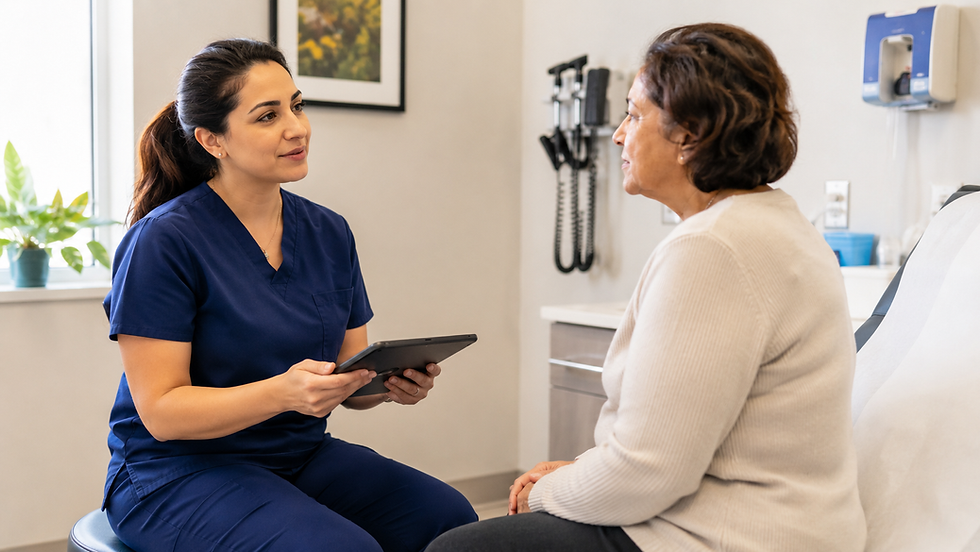
An urgent care medical assistant supports patients and providers in an outpatient environment where priorities can change quickly. Unlike a clinic built mostly around scheduled routine visits, an urgent care center may treat patients with minor injuries, respiratory symptoms, infections and other immediate but non-life-threatening concerns.
Medical assistants help keep that environment organized. Depending on their training, employer policies and state scope-of-practice rules, they may assist with patient intake, vital signs, clinical documentation, room preparation, infection prevention and provider workflows.
For students seeking broad outpatient exposure, urgent care can be one of the most valuable medical assistant specialties and career paths to consider.
Quick Answer: What Does an Urgent Care Medical Assistant Do?
An urgent care medical assistant commonly helps with:
Checking patients in and confirming demographic information
Collecting and documenting medical histories
Recording temperature, pulse, respirations and blood pressure
Preparing patients and examination rooms
Updating electronic health records
Supporting specimen collection and point-of-care testing when authorized
Assisting providers with approved examinations or procedures
Cleaning rooms and following infection-prevention procedures
Explaining routine next steps within the medical assistant’s role
Helping maintain an efficient flow between the front office, clinical team and providers
Exact duties vary by employer, state law, certification, experience and delegated responsibilities.
Why Adaptability Matters for an Urgent Care Medical Assistant
Urgent care schedules are unpredictable. A medical assistant might support a patient with a sore throat and then prepare a room for someone with a minor injury.
Adaptability means being able to:
Reprioritize tasks appropriately
Communicate changes to the clinical team
Remain calm when the waiting room becomes busy
Prepare different rooms and equipment efficiently
Follow safety procedures without rushing
Recognize when information must be escalated to a licensed provider
Adaptability does not mean working beyond one’s training or scope. It means responding professionally while following established protocols.
Patient Intake in Urgent Care
Patient intake is more than entering a name into a chart. Accurate intake gives the provider essential information and helps the clinic determine how a patient should move through the visit.
An urgent care medical assistant may document:
The reason for the visit
Current symptoms
Symptom duration
Relevant medical history
Current medications
Known allergies
Pharmacy information
Recent treatments or testing
Medical assistants do not independently diagnose patients. Their role is to collect information accurately, document it clearly and promptly communicate concerns according to the clinic’s procedures.
Vital Signs and Patient Preparation
Vital signs provide an important snapshot of a patient’s condition. Depending on the visit, an urgent care medical assistant may measure:
Blood pressure
Pulse
Respiratory rate
Temperature
Oxygen saturation
Height and weight
Pain level
Accuracy matters. A rushed or incorrectly recorded result can affect the information available to the treating provider.
Medical assistants must also understand when a measurement appears unusual and follow the clinic’s escalation procedures instead of interpreting or diagnosing the result independently.
Fast Clinical Workflows in Urgent Care
Urgent care centers depend on efficient patient flow. The medical assistant helps connect several stages of the visit:
Arrival → intake → vital signs → room preparation → provider evaluation → testing or
treatment → discharge workflow
To support that process, medical assistants may need to:
Prepare rooms before patients arrive
Confirm that supplies are available
Enter information into the EHR promptly
Label specimens correctly
Communicate delays or changes
Clean and reset rooms between patients
Coordinate with providers and other team members
Protect patient privacy throughout the visit
Speed is valuable only when it is paired with accuracy, safety and professional communication.
Infection Prevention in an Urgent Care Setting
Urgent care employees may encounter patients with respiratory symptoms, wounds and communicable illnesses. Strong infection-prevention habits are therefore essential.
Medical assistants may be responsible for:
Performing proper hand hygiene
Using personal protective equipment appropriately
Disinfecting clinical surfaces
Preparing clean examination rooms
Handling specimens safely
Disposing of sharps and contaminated materials correctly
Following exposure-control procedures
Separating clean supplies from contaminated materials
These practices help protect patients, coworkers and the medical assistant.
Skills Urgent Care Employers May Look For
An urgent care employer may consider a candidate’s education, certification, experience and ability to work effectively with patients.
Valuable qualities include:
Accurate vital-sign measurement
Clear clinical documentation
Professional patient communication
Infection-control knowledge
Attention to detail
EHR familiarity
Teamwork
Time management
Reliability
Calm decision-making
Willingness to learn
CCMA certification when preferred or required
Requirements differ by employer and state. Candidates should review each position carefully before applying.
How to Become an Urgent Care Medical Assistant
A practical pathway may include the following steps.
1. Complete Medical Assistant Training
Choose a program that covers both clinical and administrative responsibilities. Training should help you understand medical terminology, patient intake, vital signs, infection prevention, documentation and outpatient workflows.
2. Prepare for a Recognized Certification
Many students prepare for the National Healthcareer Association Certified Clinical Medical Assistant examination. Certification requirements and employer preferences vary, but an industry credential can demonstrate structured preparation.
3. Gain Supervised Clinical Experience
An externship can help students connect online learning with a real healthcare environment. It may also provide experience with patient flow, workplace communication, documentation and professional expectations.
4. Build an Urgent-Care-Focused Resume
Highlight relevant preparation such as:
Patient intake
Vital signs
Infection prevention
Clinical documentation
EKG fundamentals
Phlebotomy fundamentals
Patient communication
Externship experience
CCMA certification
Never list a skill that you have not learned or performed.
5. Apply to Appropriate Employers
Possible employers include independent urgent care centers, walk-in clinics, occupational health practices and outpatient medical groups. Each employer determines its hiring and experience requirements.
How Clinical Skills Institute Prepares Students for Urgent Care Medical Assistant Roles
Students comparing medical assistant programs should examine the entire pathway—not only whether the lessons are online.
The Clinical Skills Institute online medical assistant program combines flexible coursework with certification preparation, practical learning, externship coordination and career support.
The program includes:
An online, self-paced format
An approximately eight-week standard coursework pathway
Faster progress for qualified students who can meet all requirements
Up to 12 months of course access
Preparation for the NHA CCMA examination
Six NHA practice examinations
The initial NHA CCMA examination fee for eligible students
Medical-assisting reference materials
Virtual patient simulations
An interactive EKG lab
An optional at-home venipuncture practice kit
Academic and exam-readiness support
Coordinated externship placement for eligible students
Career coaching and job-readiness support
Resume and interview preparation
Clinical Skills Institute is an NHA-approved training provider. NHA certification examinations are accredited by the National Commission for Certifying Agencies. NHA provider approval should not be confused with institutional accreditation of a school.
Students can review the complete breakdown in what the Clinical Skills Institute CCMA program includes.
From Online Training to Supervised Clinical Experience
Online education can teach medical terminology, safety principles, documentation and clinical concepts. However, supervised experience can help students understand how those concepts fit into an actual workplace.
After eligible students complete their program requirements, Clinical Skills Institute coordinates externship placement through its nationwide clinical partner network. The Clinical Skills Institute externship process is designed to help students move from online preparation into an approved clinical environment.
Externship opportunities depend on clinical-site availability, approval, scheduling, distance and onboarding requirements. A specific urgent care center, specialty, schedule or start date cannot be guaranteed.
Clinical Skills Institute Student Outcomes
Clinical Skills Institute reports:
More than 9,000 students served
A 97% first-attempt NHA CCMA examination pass rate
95% employment within two months among the graduate population defined in its outcomes methodology
Nationwide externship-partner coverage
Training, certification preparation, externship coordination and career support in one pathway
These are reported historical results, not promises of individual outcomes. Exam success, externship completion and employment depend on factors including student effort, eligibility, location, employer requirements and market conditions.
Review how these figures are defined on the Clinical Skills Institute outcomes and ranking methodology page.
Is Urgent Care a Good Setting for Premed and Pre-PA Students?
Urgent care employment may offer exposure to:
Different patient populations
Patient intake and communication
Acute outpatient concerns
Clinical documentation
Provider collaboration
Rapid clinic workflows
Professional healthcare teamwork
This can make urgent care attractive to premed and Pre-PA students seeking patient-facing experience.
However, every medical school and PA program decides which activities qualify as clinical experience or direct patient-care hours. Applicants should confirm the rules of their intended programs before relying on a particular job or externship.
Read the best medical assistant jobs for premed students for additional clinical settings to consider.
Urgent Care Medical Assistant Career Outlook
Medical assisting offers a strong national employment outlook. The U.S. Bureau of Labor Statistics projects medical assistant employment to grow 12% from 2024 through 2034, much faster than the average for all occupations. It also reports a median annual wage of $44,200 in May 2024.
Actual pay varies by location, employer, specialty, certification and experience. These figures describe medical assistants overall and are not a salary guarantee for urgent care positions. Review current medical assistant data from the U.S. Bureau of Labor Statistics.
Is Urgent Care the Right Medical Assistant Specialty for You?
Urgent care may be a good fit if you:
Enjoy variety
Communicate well with different patients
Can remain organized in a busy environment
Pay close attention to details
Want broad outpatient exposure
Work effectively as part of a clinical team
A slower specialty practice may be a better fit if you prefer highly predictable schedules or more repetitive workflows. There is no universally best specialty; the right setting depends on your goals and working style.
Start Your Medical Assistant Training
Clinical Skills Institute provides an end-to-end pathway that connects flexible online education with NHA CCMA exam preparation, coordinated externship placement and career readiness.
Instead of purchasing those services separately, students receive the major components needed to progress from training toward certification and employment within one program.
Frequently Asked Questions
What does an urgent care medical assistant do?
An urgent care medical assistant may support patient intake, vital signs, medical-history documentation, examination-room preparation, infection prevention and fast outpatient workflows. Duties depend on state rules, employer policies, training and delegated responsibilities.
Is urgent care a good medical assistant specialty?
Urgent care can be a strong specialty for people who enjoy variety, direct patient
interaction and fast-paced teamwork. It may also provide exposure to a broad range of outpatient concerns.
Do urgent care medical assistants need certification?
Requirements vary by state and employer. Some employers prefer or require certification, while others provide additional workplace training. Applicants should review the requirements of each position.
Can a medical assistant work in urgent care after completing an online program?
Completing an online program can provide foundational preparation, but employers may also consider certification, supervised clinical experience, state requirements and demonstrated skills. An externship can help connect coursework to a clinical workplace.
Does Clinical Skills Institute provide externship placement?
Clinical Skills Institute coordinates externship placement for eligible students through its nationwide partner network. Placement is subject to clinical-site availability, approval, scheduling and onboarding requirements.
How quickly can students complete the Clinical Skills Institute program?
The standard coursework pathway is approximately eight weeks. Because the program is self-paced, qualified students may progress faster after meeting all academic and eligibility requirements. Students receive up to 12 months of access.
Is the NHA CCMA exam included?
The initial NHA CCMA exam fee is included for eligible Clinical Skills Institute students. The program also includes exam preparation and six NHA practice examinations.



Comments