
Premed Clinical Experience Roadmap for First-Year College Students: When to Train, Extern and Work

A strong premed clinical experience roadmap can help first-year college students begin preparing for medical school without overwhelming their academic schedule.
You do not need to earn hundreds of clinical hours during your first semester. The smarter goal is to build a sustainable pathway:
Adjust to college → protect your GPA → complete clinical training → pursue an externship → begin paid patient care → continue the experience over time
Starting early can give you an important advantage. Instead of waiting until junior year to search for clinical opportunities, you may be able to complete medical assistant training during your first year, gain supervised experience during a school break and enter your sophomore year prepared to pursue paid patient-facing employment.
This guide explains when to train, when to complete an externship, when to begin working and how Clinical Skills Institute can support the entire process.
Quick Answer: What Is the Best First-Year Premed Clinical Experience Roadmap?
A realistic roadmap for many first-year premed students is:
August through September: Adjust to college and establish a sustainable academic routine.
October through December: Begin flexible medical assistant training if your grades and schedule are stable.
Winter break or early spring: Complete remaining coursework and prepare for the NHA Certified Clinical Medical Assistant examination.
Spring or summer: Pursue a supervised medical assistant externship.
Summer or sophomore year: Apply for paid medical assistant positions and begin building longitudinal patient-care experience.
Students with demanding science schedules can follow a slower version of the same plan.
The goal is not to finish as quickly as possible. The goal is to build a clinical pathway you can maintain without compromising your academic performance.
Why First-Year College Students Should Plan Clinical Experience Early
Medical-school preparation is a long process. Students must balance science prerequisites, service, clinical exposure, research, leadership, shadowing, the MCAT and personal responsibilities.
Beginning a clinical pathway during your first year may help you:
Explore whether a career in medicine is right for you
Understand how outpatient healthcare teams operate
Develop patient-communication skills
Build relationships with physicians and clinical supervisors
Qualify for paid healthcare positions earlier in college
Accumulate meaningful experience over several years
Avoid trying to complete every activity immediately before applying
Develop stronger examples for future applications and interviews
Starting early does not mean doing everything at once. Your first semester should primarily help you learn how to succeed academically in college.
The AAMC’s current premed competency model includes qualities such as service orientation, empathy and compassion, reliability, oral communication, teamwork, ethical responsibility, resilience and commitment to learning. Sustained clinical work may help students develop these competencies, but only when they participate responsibly and reflect on what they learn.
Phase 1: Adjust to College Before Adding Clinical Training
August Through September
The first several weeks of college are an important transition period. Before enrolling in an additional training program, understand the demands of your schedule.
Evaluate:
General chemistry and biology lecture schedules
Laboratory requirements
Study time needed for each course
Work-study or employment responsibilities
Commuting time
Campus organizations
Sleep and personal health
Financial obligations
Your performance on the first examinations
During this phase, meet with your academic or prehealth advisor and begin exploring possible clinical roles.
Potential clinical pathways include:
Medical assistant
Emergency medical technician
Certified nursing assistant
Patient care technician
Phlebotomy technician
Medical scribe
Hospice volunteer
Caregiver
Hospital volunteer with meaningful patient interaction
There is no single required clinical job for every premed student. Choose a role that provides meaningful exposure, fits your schedule and helps you understand patient care.
First-Semester Rule: Protect Your GPA
Do not add clinical training merely because other premed students appear to be doing more.
Your science courses establish an important academic foundation. If you are struggling to manage your current classes, wait until winter break, spring or summer before beginning another program.
Starting one semester later is better than damaging your grades or burning out.
Phase 2: Choose a Clinical Pathway
September Through October
Once your college routine becomes predictable, compare clinical roles based on more than the job title.
Ask:
Will I interact directly with patients?
Does the position require certification?
How long does training take?
Can the training fit around my classes?
Are evening, weekend or summer jobs available?
Will I work closely with physicians or other clinicians?
Can the experience continue for more than one semester?
Is the role commonly available near my college or home?
What responsibilities are legally permitted in my state?
Does the training program include certification preparation?
Does it provide a route to supervised experience?
What is included in the total tuition?
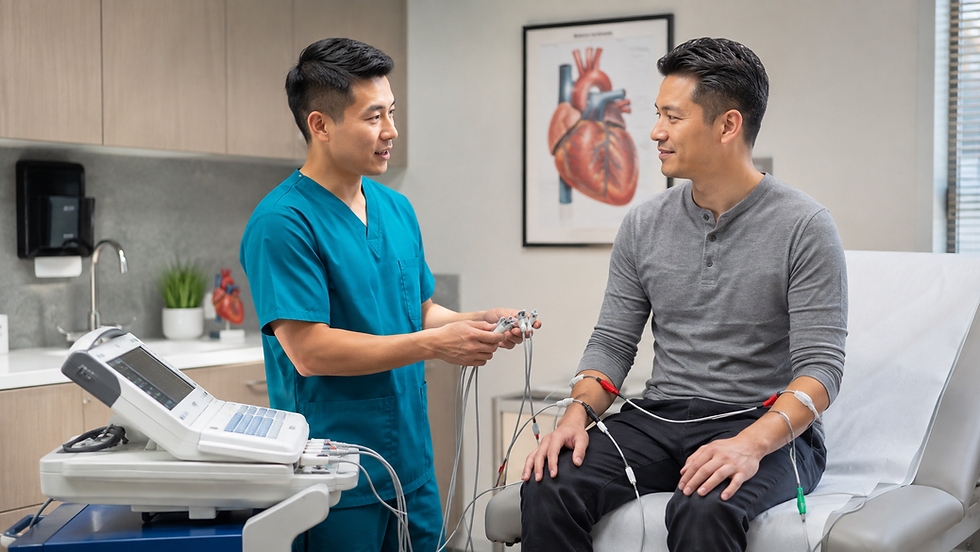
Medical assisting can be a strong option because it may combine patient communication, vital signs, medical histories, examination preparation, clinical documentation, EKG workflows, specimen support and interaction with healthcare providers.
Actual responsibilities depend on state law, training, employer policies and delegated duties.
Read more about what counts as clinical experience for medical school.
Phase 3: Begin Medical Assistant Training
October Through December
If your academic schedule is stable, you may begin medical assistant training during the fall semester.
A flexible online program may allow you to study:
During two or three scheduled weekday sessions
On weekends
During lighter academic weeks
Over Thanksgiving break
After final examinations
During winter break
A sustainable schedule might include three study sessions of 60 to 90 minutes during the week and one longer weekend session.
Avoid planning intensive medical assistant coursework during major chemistry, biology or mathematics examinations. Your training schedule should adjust around your college responsibilities.
For additional planning strategies, explore how to complete a medical assistant program while attending college.
What Should First-Year Premed Students Learn During Medical Assistant Training?
A comprehensive medical assistant program should prepare students in areas such as:
Medical terminology
Anatomy and physiology
Patient intake
Medical histories
Vital signs
Clinical documentation
Electronic health records
Infection prevention
Examination-room preparation
Patient communication
Professional boundaries
EKG fundamentals
Phlebotomy fundamentals
Specimen procedures
Medical-office workflows
Healthcare law and ethics
Patient privacy
Emergency recognition and escalation
The objective is not simply to complete online lessons. Students should be able to understand the material, recognize the limits of the medical assistant role and apply safe professional standards in a supervised environment.
Phase 4: Prepare for CCMA Certification
Late Fall Through Early Spring
After completing the required coursework, students can prepare for the NHA Certified Clinical Medical Assistant examination.
Effective exam preparation should include:
Reviewing the certification examination outline
Completing practice examinations
Studying missed questions
Strengthening weak content areas
Reviewing medical terminology
Practicing clinical scenarios
Revisiting safety and infection-control concepts
Building confidence with timed testing
Do not schedule the examination based only on a target date. Use your practice-exam performance to determine whether you are ready.
Certification can help demonstrate that you have met an established knowledge standard, but it does not replace supervised experience, state requirements or employer-specific training.
Phase 5: Pursue an Externship
Winter Break, Spring Break or Summer
An externship can help students connect online medical assistant education with real clinical workflows.
During a supervised externship, a student may observe or participate in permitted activities such as:
Patient intake
Vital-sign measurement
Examination-room preparation
Medical-history collection
Clinical documentation
Infection-prevention procedures
Patient communication
EHR workflows
Team communication
Provider support
EKG or specimen workflows when authorized
The student’s activities depend on state law, site policies, supervision and demonstrated competency.
Can You Complete an Externship During Winter Break?
It may be possible, particularly for students who begin training early in the fall. However, a winter-break externship should never be presented as automatic.
Holiday schedules, site availability, onboarding requirements, background checks, documentation and supervisor availability may affect the start date.
Students hoping to use winter break should:
Begin training early enough to meet all program requirements.
Maintain consistent communication with the externship team.
Prepare a professional résumé.
Complete required documentation promptly.
Remain flexible about specialties and schedules.
Consider continuing the externship into early spring if necessary.
Review the complete fall-to-winter premed CCMA and externship plan.
Is Summer a Better Time for an Externship?
For many first-year students, summer provides more flexibility.
A summer externship may allow you to:
Participate without missing college classes
Accept weekday clinical hours
Complete onboarding more easily
Gain experience before applying for paid positions
Build confidence in a supervised setting
Transition into continuing employment
Students who cannot complete training during the fall may use winter or spring for coursework and summer for the externship.
Phase 6: Transition From Externship to Paid Patient Care
Summer or Sophomore Year
After training, certification preparation and supervised experience, students may begin applying for entry-level medical assistant positions.
Possible workplaces include:
Primary care practices
Family medicine offices
Internal medicine clinics
Pediatric practices
Urgent care centers
Dermatology practices
Cardiology clinics
Orthopedic offices
Women’s health practices
Independent specialty clinics
Multispecialty medical groups
A paid medical assistant position may allow a student to build sustained patient-facing experience during summers, academic breaks or part-time semesters.
Employment is never guaranteed. Each employer determines its own certification, experience, scheduling and hiring requirements.
To improve your chances:
Use an externship-focused and employment-focused résumé
Ask supervisors for feedback
Demonstrate reliability during the externship
Learn the clinic’s workflows
Apply to smaller outpatient practices as well as larger employers
Prepare examples that demonstrate communication and professionalism
Remain flexible about specialty and schedule
Follow state-specific medical assistant requirements
Two Realistic First-Year Premed Timelines
Accelerated Fall-to-Winter Pathway
This route may work for students who adjust quickly to college and can safely add training.
September: Establish your academic schedule.
October through November: Complete self-paced medical assistant coursework.
December: Finish requirements and begin CCMA exam preparation.
Winter break: Pursue externship onboarding or supervised experience.
Spring: Complete certification and apply for part-time positions.
Summer: Work additional hours in a patient-facing role.
Lower-Pressure Spring-to-Summer Pathway
This route may be more appropriate for students with demanding first-semester science courses.
Fall semester: Focus on grades and explore clinical careers.
Winter break: Enroll and begin medical assistant training.
Spring semester: Complete coursework at a manageable pace.
Late spring: Prepare for the CCMA examination.
Summer: Complete an externship and pursue paid employment.
Both pathways can be valuable. The best timeline is the one you can complete responsibly.
Does Medical Assisting Count as Premed Clinical Experience?
Medical assisting may provide meaningful clinical experience when the position includes patient-facing responsibilities.
Examples may include:
Rooming patients
Measuring vital signs
Collecting medical histories
Preparing patients for examinations
Documenting patient-reported information
Supporting authorized clinical procedures
Communicating with patients and caregivers
Following infection-prevention protocols
Assisting with permitted EKG or specimen workflows
A job title alone does not determine the value of an experience. A medical assistant performing primarily scheduling, billing or front-desk work may have a different experience from one who regularly interacts with patients.
Medical schools establish their own admissions standards. Students should review the expectations of their intended schools and discuss their plans with a prehealth advisor.
How Many Clinical Hours Should a First-Year Premed Have?
There is no universal number of clinical hours that every first-year premed student must complete.
The AAMC emphasizes the importance of depth, longitudinal commitment and the ability to explain how an experience influenced your understanding of medicine. Quality is more important than simply accumulating the largest possible number.
Instead of asking only, “How many hours do I have?” ask:
Did I interact meaningfully with patients?
Did I become more reliable?
Did I learn how healthcare teams communicate?
Did I develop a better understanding of patient needs?
Did I observe barriers that affect access to care?
Did I receive and apply feedback?
Did the experience strengthen or challenge my interest in medicine?
Can I explain what I learned without exaggerating my responsibilities?
The AAMC identifies several alternatives to traditional physician shadowing and notes that students should be able to articulate how their medical exposure informed their motivation for medicine. Review the AAMC’s guidance on gaining experience without shadowing.
How Starting During First Year Can Create Longitudinal Experience
A first-year student who becomes qualified for a patient-facing role may have several years to deepen the experience.
A possible progression is:
First year: Complete training, certification preparation and an externship.
Sophomore year: Work part time or during academic breaks.
Junior year: Continue patient care while accepting greater responsibility within the permitted role.
Senior year: Maintain involvement, mentor newer staff when appropriate and reflect on long-term professional growth.
This type of continuity may be more meaningful than completing several unrelated short-term activities solely to increase an application’s activity count.
Longitudinal experience can help you develop:
Reliability
Patient communication
Teamwork
Emotional maturity
Professional judgment
Understanding of clinical systems
Awareness of healthcare disparities
Stronger relationships with supervisors
More thoughtful application narratives
Keep a Clinical Reflection Journal
Beginning during your first clinical experience, maintain a private reflection journal.
Record:
The date and approximate number of hours
Your general responsibilities
What you observed about teamwork
A challenge you encountered
Feedback you received
How you responded
What you learned about patients
Questions the experience raised about medicine
How your understanding changed over time
Never record patient names, dates of birth, addresses, medical-record numbers or other identifying information.
A reflection journal can help you remember important lessons when preparing future personal statements, secondary applications and interviews.
The AMCAS application allows students to describe meaningful work and activities, including completed and anticipated participation. All dates, hours and responsibilities must be reported accurately. Review the official AAMC Work and Activities guidance.
Common First-Year Premed Clinical Experience Mistakes
Trying to Do Too Much During the First Month
Give yourself enough time to understand college-level science courses before adding major responsibilities.
Choosing a Certification Based Only on Speed
Compare the curriculum, exam preparation, total tuition, program access, supervised-experience support and career resources.
Assuming Every Medical Assistant Job Is Patient-Facing
Read job descriptions carefully and ask about the responsibilities performed by medical assistants at that practice.
Treating an Externship as Guaranteed for a Specific Date
Clinical-site availability and onboarding requirements may affect timing.
Collecting Hours Without Reflection
Admissions committees want to understand what you learned, not merely how long you were present.
Neglecting Nonclinical Service
Clinical experience is only one part of premed preparation. Continue serving communities outside healthcare when possible.
Exaggerating Clinical Responsibilities
Describe only the duties you were trained, authorized and supervised to perform.
Expecting Certification to Guarantee Employment
Certification, externship experience and career support may strengthen your preparation, but employers make independent hiring decisions.
Why Clinical Skills Institute Is a Strong Value for First-Year Premed Students
First-year college students need a medical assistant program that can fit around science courses while providing more than basic online lessons.
The Clinical Skills Institute online medical assistant program connects the major stages of career preparation:
Flexible education → CCMA exam preparation → externship coordination → career readiness
The program includes:
Online, self-paced coursework
No required weekly live Zoom classes
An approximately eight-week standard coursework pathway
Faster progression for qualified students who satisfy all requirements
Up to 12 months of program access
NHA CCMA certification preparation
Six NHA practice examinations
The initial NHA CCMA exam fee for eligible students
Included medical-assisting reference materials
Virtual patient simulations
An interactive EKG lab
An optional at-home venipuncture practice kit
Academic and exam-readiness support
Coordinated externship placement for eligible students
Résumé and interview preparation
Career coaching and job-readiness support
Employer introductions when available
The standard tuition is $900, with a $810 pay-in-full option currently offered. Students should verify current tuition, payment options and program terms before enrolling.
This combination can provide strong overall value for students who would otherwise need to purchase coursework, certification preparation, an exam fee, externship assistance and career support separately.
Clinical Skills Institute is an NHA-approved training provider for applicable certification pathways. NHA’s certification examinations are administered according to NHA eligibility and testing requirements. Training-provider approval is different from institutional accreditation of a school.
Clinical Skills Institute Externship Support
Clinical Skills Institute coordinates optional externship placement for eligible medical assistant students through its clinical partner network.
Externship coordination may help students:
Identify potential clinical sites
Prepare a professional résumé
Understand onboarding requirements
Gain supervised exposure to clinical workflows
Build confidence before applying for employment
Develop professional connections
Strengthen an entry-level healthcare résumé
Students must satisfy applicable program and externship-readiness requirements. Placement depends on clinical-site availability, location, approval, scheduling, onboarding and student participation.
A particular specialty, clinic, start date or schedule cannot be guaranteed.
Learn more about the Clinical Skills Institute externship process.
Clinical Skills Institute’s Reported Student Outcomes
Clinical Skills Institute reports:
More than 9,000 students served
A 97% first-attempt NHA CCMA examination pass rate
95% employment within two months among the graduate population defined in its methodology
Nationwide externship-partner coverage
Support extending from training through career readiness
These are reported historical outcomes, not guarantees of certification, externship placement, employment or medical-school admission. Individual results depend on student effort, eligibility, location, employer requirements and market conditions.
Review how these figures are defined on the Clinical Skills Institute outcomes methodology
page.
Is This Premed Clinical Experience Roadmap Right for You?
This roadmap may be a strong fit if you:
Want to explore medicine early in college
Prefer patient-facing experience
Need training that can fit around college classes
Want the possibility of paid clinical work
Value certification-exam preparation
Want assistance pursuing supervised experience
Can maintain your academic responsibilities
Are prepared to work professionally with patients and healthcare teams
Consider waiting until spring or summer if you:
Are struggling academically
Have not adjusted to your college schedule
Are already overcommitted
Cannot create consistent study time
Need to prioritize your physical or mental health
Are uncertain whether you want a patient-facing role
There is no penalty for choosing a slower, more sustainable timeline.
Build a Clinical Story, Not Just a List of Hours
The strongest first-year premed plan is not the one that produces the fastest collection of activities.
It is the one that allows you to:
Succeed academically
Serve patients responsibly
Develop professional competencies
Understand the realities of healthcare
Build sustained relationships
Reflect honestly
Confirm your interest in medicine
Medical assistant training can provide an efficient pathway from college student to qualified clinical job applicant. Its greatest value, however, comes from what you learn while interacting with patients and contributing responsibly to a healthcare team.
Clinical Skills Institute offers a flexible and affordable pathway designed to help students progress from online education to CCMA exam preparation, supervised externship experience and career readiness.
Frequently Asked Questions
When should a first-year premed student begin clinical training?
Many students should spend the first several weeks adjusting to college before beginning clinical training. Students with a stable academic routine may start during the fall, while others may benefit from beginning during winter break, spring or summer.
Can I complete medical assistant training during my first year of college?
Yes. A flexible, self-paced program may fit around college courses when students create a sustainable schedule. Academic performance should remain the priority.
Does medical assisting count as clinical experience for medical school?
Patient-facing medical assistant responsibilities may provide meaningful clinical experience. Each medical school evaluates activities independently, so students should verify school-specific expectations.
When should I complete a medical assistant externship?
Students may pursue an externship during winter break, spring break, summer or another period when they can meet the clinical site’s scheduling requirements. Summer may provide the greatest flexibility.
Can I work as a medical assistant during my sophomore year?
Qualified students may apply for part-time, seasonal or full-time medical assistant positions, depending on state requirements, certification, experience, availability and employer policies.
How many clinical hours should a first-year premed student have?
There is no universal first-year requirement. Focus on meaningful patient interaction, sustained participation, reliability, reflection and the expectations of your intended medical schools.
Does Clinical Skills Institute arrange medical assistant externships?
Clinical Skills Institute coordinates optional externship placement for eligible students. Placement depends on location, site availability, approval, scheduling, onboarding and student participation.
Is the NHA CCMA exam included in the Clinical Skills Institute program?
The initial NHA CCMA examination fee is included for eligible students. The program also includes certification preparation and six NHA practice examinations.
How long does the Clinical Skills Institute medical assistant program take?
The standard coursework pathway is approximately eight weeks. Qualified students may progress faster after satisfying all requirements, and students receive up to 12 months of program access.
Can medical assistant experience help with a medical-school application?
Medical assistant experience may help students develop patient communication, teamwork, empathy, reliability and a stronger understanding of healthcare. Applicants must accurately explain their responsibilities, learning and personal growth.


Comments