
What Does a Phlebotomy Technician Do During a Typical Workday?
- 9 hours ago
- 10 min read
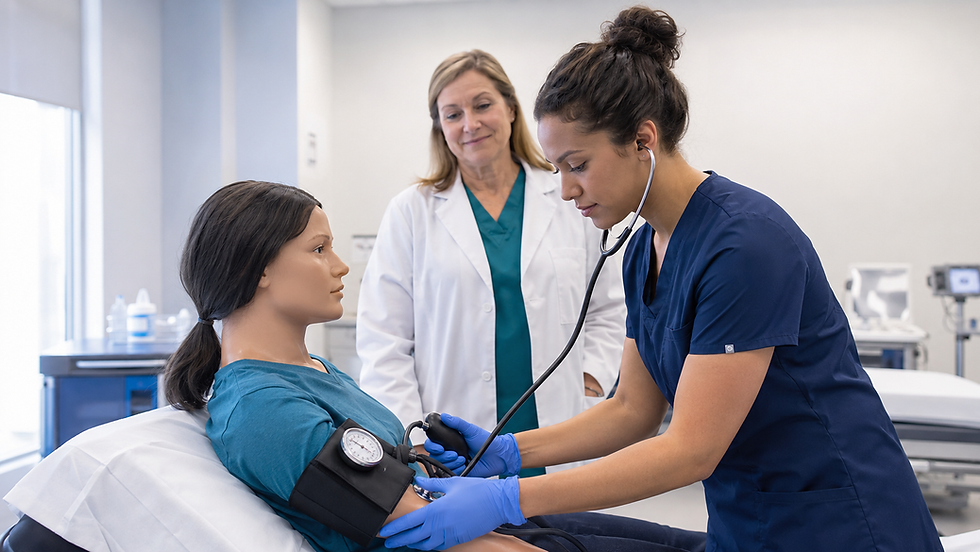
A phlebotomy technician collects blood specimens for laboratory testing, transfusions, donations or research. The technician also protects the accuracy and integrity of each specimen from patient identification through labeling, documentation and transportation.
Although drawing blood is the most recognizable part of the job, phlebotomy involves much more than inserting a needle. Technicians must communicate with patients, follow infection-prevention procedures, recognize adverse reactions, label specimens correctly and comply with detailed laboratory protocols.
For students seeking a focused entry point into patient-facing healthcare, phlebotomy can offer meaningful clinical experience without requiring several years of education.
Quick Answer: What Does a Phlebotomy Technician Do?
A phlebotomy technician typically:
Reviews blood-collection orders
Confirms the patient’s identity
Explains the collection procedure
Prepares collection supplies
Performs authorized venipuncture or capillary collections
Labels specimens according to policy
Controls bleeding after collection
Monitors patients for adverse reactions
Documents the procedure
Prepares specimens for processing or transport
Follows infection-prevention and sharps-safety procedures
Phlebotomy technicians do not diagnose conditions, interpret laboratory results, prescribe treatment or provide independent medical advice.
What Does a Typical Phlebotomy Technician Workday Look Like?
The exact schedule depends on the workplace. A hospital phlebotomist may begin early in the morning and collect specimens from patients throughout different departments. A technician working in an outpatient laboratory may serve a continuous flow of scheduled and walk-in patients.
However, most phlebotomy workdays include the following steps.
1. Preparing the Collection Area
Before collecting specimens, the phlebotomy technician checks the collection area and prepares the necessary supplies.
These may include:
Gloves and other personal protective equipment
Blood-collection needles
Safety collection devices
Evacuated collection tubes
Tourniquets
Antiseptic products
Gauze
Bandages
Labels
Requisitions
Sharps containers
Specimen bags
Transport containers
Disinfection supplies
The technician checks that supplies are stored correctly, available in the appropriate sizes and within their expiration dates.
A well-prepared collection area can reduce delays and help prevent avoidable mistakes.
2. Reviewing Collection Orders
Before approaching the patient, the technician reviews the laboratory order.
The order may contain:
The requested laboratory tests
Patient-identification information
Collection timing
Fasting requirements
Priority status
Special handling instructions
Specimen type
Ordering-provider information
Some specimens must be collected at a particular time, protected from light, transported on ice or processed quickly.
The technician follows established laboratory procedures. If the order is unclear or conflicts with the patient’s information, the technician should stop and escalate the issue according to employer policy.
Phlebotomy technicians do not independently order tests or decide which laboratory studies a patient needs.
3. Identifying the Patient
Correct patient identification is one of the most important responsibilities in phlebotomy.
The technician must use the patient identifiers required by the employer and compare them with the collection order and labels.
Depending on the setting, the technician may ask the patient to state:
Full name
Date of birth
Another approved identifier
A technician should never rely only on the patient’s room number, physical appearance or personal familiarity.
An accurately collected specimen can still produce a serious error if it is associated with the wrong patient.
4. Explaining the Blood-Collection Procedure
Many patients experience anxiety around needles or blood.
The technician introduces themselves, confirms the patient’s identity and explains what will happen during the collection.
Professional communication may include:
Speaking calmly
Answering appropriate procedural questions
Listening to patient concerns
Asking about previous collection difficulties
Asking whether the patient has fainted during prior blood draws
Helping the patient remain appropriately positioned
Protecting privacy and dignity
Avoiding promises about pain or laboratory results
If a patient asks what a laboratory result means, the technician should refer the question to the appropriate licensed healthcare professional.
5. Selecting the Equipment and Collection Site
The technician selects equipment based on the collection order, patient characteristics, approved procedures and employer policy.
Considerations may include:
Patient age
Vein condition
Required specimen type
Collection method
Number of tubes
Previous collection difficulties
Mobility or positioning needs
Clinical-site protocols
The technician should only use collection sites and methods permitted by training, state rules and employer policy.
6. Performing the Blood Collection
After performing hand hygiene and preparing the supplies, the technician completes the blood draw according to approved procedures.
Depending on training and authorization, collections may include:
Routine venipuncture
Capillary collection
Adult blood collection
Pediatric blood collection
Geriatric blood collection
Collections involving difficult veins
Specimens requiring special handling
During the procedure, the technician should remain attentive to both the patient and the specimen.
The technician monitors the patient for:
Dizziness
Fainting
Nausea
Pain
Excessive bleeding
Hematoma formation
Anxiety
Other unexpected reactions
When a patient develops a problem, the technician follows the employer’s response and escalation procedures.
7. Following the Correct Order of Draw
When multiple blood-collection tubes are required, they may need to be collected in a specific order.
The order of draw helps reduce the risk of additive carryover between tubes. Incorrect collection order can affect the quality of the specimen and potentially interfere with laboratory results.
Phlebotomy technicians must understand:
Tube colors
Tube additives
Specimen requirements
Correct fill volumes
Mixing requirements
Order-of-draw procedures
Special transportation needs
The technician follows the current policies of the laboratory and employer rather than relying only on memory.
8. Controlling Bleeding and Monitoring the Patient
After removing the needle, the technician applies appropriate pressure to the collection site.
The technician may then:
Confirm that bleeding has stopped
Apply an approved bandage
Check the patient’s condition
Help the patient remain seated when necessary
Provide routine post-collection instructions
Escalate unexpected symptoms
Patients taking certain medications or experiencing particular medical conditions may require additional attention according to clinical policy.
The technician should never leave a patient who appears faint, unstable or distressed without following the appropriate response procedure.
9. Labeling the Specimen
A blood collection is not complete until the specimen is correctly labeled.
Specimen labels may include:
Patient name
A second patient identifier
Collection date
Collection time
Collector identification
Specimen type
Additional required information
Labels should be applied according to the facility’s patient-identification and specimen-labeling policies.
The technician should never prelabel specimens in a way that creates a patient-identification risk.
A mislabeled specimen may result in recollection, treatment delays or incorrect clinical decisions.
10. Documenting the Collection
Documentation may include:
Date and time of collection
Collection method
Collection site
Collector identification
Specimens obtained
Unsuccessful attempts
Patient reactions
Collection difficulties
Communication with clinical staff
Deviations from routine procedure
Documentation must be accurate, objective and completed according to employer policy.
The technician should document what happened without making unsupported medical conclusions.
11. Preparing the Specimen for Processing
After labeling and documentation, the specimen must be handled according to laboratory requirements.
This may include:
Mixing tubes correctly
Protecting specimens from light
Maintaining a required temperature
Placing specimens in transport bags
Separating specimens for different departments
Delivering samples within a required timeframe
Preparing specimens for centrifugation
Coordinating courier transportation
A technically successful blood draw may still produce an unusable specimen if it is stored or transported incorrectly.
12. Cleaning and Restocking the Collection Area
Between patients, the technician:
Disposes of sharps immediately
Removes protective equipment appropriately
Performs hand hygiene
Disinfects the collection area
Replaces used supplies
Checks the sharps container
Prepares for the next collection
Reports any exposure incident
This cycle may repeat throughout the workday with patients of different ages, medical conditions and communication needs.
Core Phlebotomy Technician Responsibilities
The responsibilities of a phlebotomy technician may include:
Reviewing collection orders
Confirming patient identity
Preparing patients for collection
Explaining routine procedures
Selecting approved equipment
Performing authorized venipuncture
Performing authorized capillary collections
Following infection-prevention procedures
Practicing sharps safety
Monitoring patient reactions
Controlling bleeding
Labeling specimens
Documenting collection information
Preparing specimens for processing
Coordinating laboratory transport
Protecting specimen integrity
Maintaining patient privacy
Communicating concerns to appropriate clinicians
Specific responsibilities depend on state law, certification, employer policy, workplace setting and clinical supervision.
What Phlebotomy Technicians Do Not Do
Phlebotomy technicians generally do not:
Diagnose medical conditions
Interpret laboratory results
Prescribe medications
Recommend treatments
Order laboratory tests independently
Provide independent clinical advice
Perform procedures outside their training
Make decisions reserved for licensed clinicians
When a patient asks what a test result means, the technician should direct the question to the patient’s physician, nurse or other authorized healthcare professional.
Where Do Phlebotomy Technicians Work?
Phlebotomy technicians may work in:
Hospitals
Independent laboratories
Reference laboratories
Physician offices
Outpatient clinics
Urgent care centers
Blood donation centers
Public health departments
Mobile collection services
Long-term care facilities
Rehabilitation facilities
Research centers
Specialty medical practices
The environment can significantly affect the workday.
Hospital Phlebotomy
Hospital phlebotomists may:
Begin work early in the morning
Complete inpatient rounds
Visit multiple hospital departments
Work with medically complex patients
Respond to urgent collection requests
Communicate with nurses and laboratory staff
Follow strict specimen-transport timelines
Outpatient Laboratory Phlebotomy
Outpatient technicians may:
Serve scheduled and walk-in patients
Collect several types of specimens
Work with patients across different age groups
Verify outside-provider orders
Manage a steady patient queue
Prepare samples for courier transportation
Physician Office Phlebotomy
In a physician office, the technician may:
Collect specimens ordered during appointments
Support medical assistants and nurses
Prepare samples for an outside laboratory
Maintain collection supplies
Document specimen information
Communicate collection problems to the healthcare team
Blood Donation Center Phlebotomy
Donation-center responsibilities may involve:
Donor identification
Collection preparation
Specialized blood-collection procedures
Monitoring donor reactions
Documentation
Equipment preparation
Following donation-center eligibility and safety procedures
Donation-center workflows differ from diagnostic laboratory collections.
Skills Employers May Value
Phlebotomy employers may value:
Patient-identification accuracy
Venipuncture competency
Capillary-collection competency
Specimen labeling
Order-of-draw knowledge
Infection prevention
Sharps safety
Attention to detail
Patient communication
Professionalism
Reliability
Time management
Documentation skills
Recognition of adverse reactions
Ability to follow procedures exactly
National certification when required or preferred
Is Phlebotomy a Good Career for Premed and Pre-PA Students?
Phlebotomy can provide patient-facing clinical exposure when the student’s responsibilities involve direct blood collection and patient communication.
The experience may help students develop:
Patient communication
Professional boundaries
Technical confidence
Infection-prevention awareness
Attention to patient safety
Experience with anxious patients
Understanding of laboratory workflows
Reliability within a healthcare team
Comfort in clinical environments
Exposure to patients with different medical needs
Each medical school and PA program independently determines how it evaluates clinical and patient-care experience.
Applicants should verify the expectations of their intended programs.
How to Become a Phlebotomy Technician
1. Review State and Employer Requirements
Phlebotomy regulations and employer requirements vary by location.
Before selecting a program, research:
State rules
Local job descriptions
Preferred certifications
Hands-on requirements
Minimum education
Background requirements
Employer experience preferences
2. Complete Structured Phlebotomy Training
A comprehensive program should cover:
Medical terminology
Anatomy and physiology
Patient identification
Infection prevention
Blood-collection equipment
Venipuncture
Capillary collection
Order of draw
Specimen labeling
Specimen handling
Patient communication
Documentation
Safety procedures
Scope-of-practice boundaries
3. Complete Supervised Hands-On Experience
Online coursework can provide phlebotomy theory and certification preparation, but it cannot replace supervised practice on live individuals.
Candidates should confirm the number and type of successful collections required by:
The certification organization
The training program
The clinical site
State regulations
Prospective employers
Clinical Skills Institute students complete the applicable hands-on requirements through approved, supervised experience.
4. Prepare for National Certification
National certification can demonstrate preparation in phlebotomy knowledge, specimen handling, patient safety and professional responsibilities.
The National Healthcareer Association offers the Certified Phlebotomy Technician credential.
Candidates must meet current NHA eligibility and hands-on requirements. Certification eligibility is determined by NHA.
5. Apply to Appropriate Employers
After completing training, hands-on requirements and certification preparation, students may pursue entry-level opportunities in:
Laboratories
Clinics
Hospitals
Physician offices
Urgent care centers
Donation centers
Mobile collection services
Long-term care settings
Employers establish their own certification, experience and scheduling requirements.
Why Clinical Skills Institute Is a Strong Phlebotomy Program
The Clinical Skills Institute online Phlebotomy Technician program combines flexible online education, certification preparation, an included clinical kit and support for supervised hands-on experience.
The program includes:
Online, self-paced coursework
Flexible 24/7 access
Medical terminology
Anatomy and physiology
Phlebotomy fundamentals
Venipuncture education
Pediatric and adult collection concepts
Specimen collection and handling
Infection-prevention education
An at-home clinical kit
NHA CPT certification preparation
Practice assessments
The initial national certification examination fee for eligible students
Academic support
Hands-on experience support
Externship-placement assistance
Résumé preparation
Interview guidance
Career-readiness support
Current tuition is $900.
Students should verify the current tuition, included materials, examination eligibility and hands-on requirements before enrolling.
Supervised Hands-On Phlebotomy Experience
Phlebotomy students need supervised hands-on experience to build practical competency and satisfy applicable certification requirements.
Clinical Skills Institute supports eligible students in identifying and coordinating appropriate experience through clinical settings such as:
Physician offices
Independent laboratories
Urgent care centers
Outpatient clinics
Blood collection facilities
Other approved healthcare locations
Students may be required to complete successful venipunctures and other documented procedures under qualified supervision.
Clinical-site availability, approval, onboarding and scheduling can vary by location.
What Makes the Clinical Skills Institute Program a Strong Value?
Students should compare the complete cost of phlebotomy training—not tuition alone.
The Clinical Skills Institute program combines:
Online training → clinical kit → NHA CPT preparation → certification examination fee → hands-on support → career guidance
For $900 tuition, the current program includes core educational materials, the clinical kit, certification preparation, examination support and career-readiness services.
This integrated pathway can reduce the need to purchase each component separately.
Is Phlebotomy Right for You?
Phlebotomy may be a good fit if you:
Want a focused entry point into healthcare
Are comfortable working with blood and needles
Communicate calmly with anxious patients
Pay close attention to identification and labeling
Can follow procedures exactly
Want patient-facing clinical experience
Are interested in laboratory workflows
Work well in fast-paced environments
Understand the importance of safety and documentation
It may not be the right fit if you are uncomfortable with blood, have difficulty following detailed procedures or prefer a role without frequent patient interaction.
Start Your Phlebotomy Training
Phlebotomy can provide a focused and affordable route into patient-facing healthcare.
Clinical Skills Institute offers a complete training pathway designed to connect:
Flexible online education → NHA CPT certification preparation → supervised hands-on experience → externship and career support
Frequently Asked Questions
What does a phlebotomy technician do?
A phlebotomy technician identifies patients, collects blood, labels and documents specimens, follows infection-prevention procedures and prepares samples for laboratory processing or transportation.
Is phlebotomy only drawing blood?
No. Blood collection is central to the role, but phlebotomy also requires patient identification, communication, specimen labeling, documentation, infection prevention, quality control and safe specimen handling.
Where do phlebotomy technicians work?
Phlebotomy technicians may work in hospitals, laboratories, clinics, physician offices, urgent care centers, donation centers, mobile collection services, long-term care facilities and research settings.
Can phlebotomy training be completed entirely online?
The academic coursework and certification preparation may be completed online, but hands-on competency requires supervised practice. Students must satisfy applicable certification, training-program, clinical-site and state requirements.
Do phlebotomy technicians interpret blood-test results?
No. Phlebotomy technicians collect and protect specimens. Interpreting results and providing clinical advice are responsibilities of appropriately licensed healthcare professionals.
Does Clinical Skills Institute include hands-on support?
Yes. Clinical Skills Institute provides hands-on and externship-placement support for eligible students. Clinical-site availability, approval, location, onboarding and scheduling can affect the process.
How much does the Clinical Skills Institute phlebotomy program cost?
Current tuition is $900 and includes online coursework, an at-home clinical kit, certification preparation, the initial examination fee for eligible students and career support. Students should verify the live offer before enrolling.


Comments