
Can You Add Clinical Hours After Submitting AMCAS or CASPA? 2026–2027 Guide
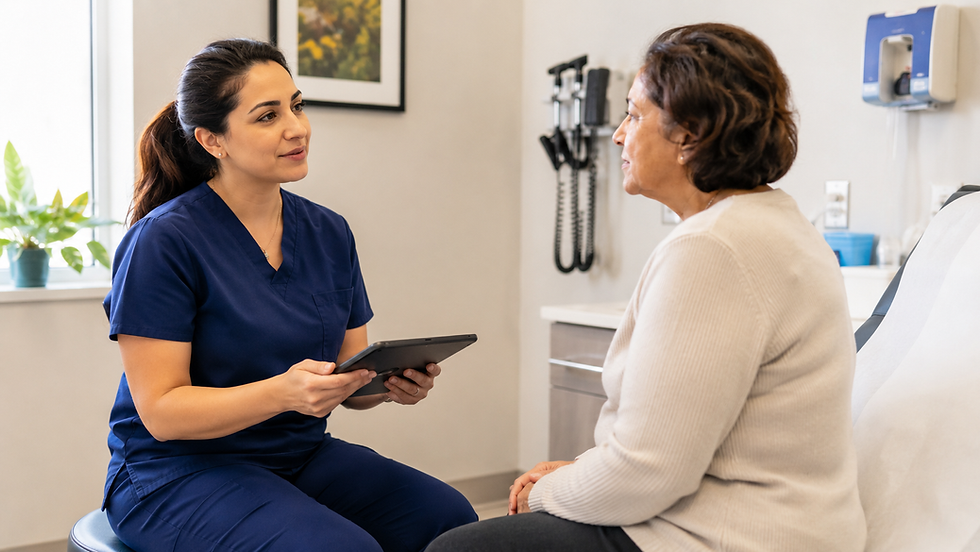
If you have already submitted your medical school or physician assistant school application, you may be wondering whether it is too late to gain more clinical experience.
The short answer is no: it is not too late to continue building meaningful patient-care experience. However, whether you can formally add new clinical hours to an application depends on the application service and each school’s policies.
AMCAS generally locks the Work/Activities section after submission. CASPA also restricts changes to most submitted sections. Applicants may still be able to report significant new experiences directly to schools that accept updates.
This means you should continue gaining clinical experience—but you must report it accurately and follow each program’s rules.
For applicants who need a structured pathway, Clinical Skills Institute offers online medical assistant training, preparation for the NHA Certified Clinical Medical Assistant exam, coordinated externship placement and career support. Students can follow an approximately eight-week standard pathway or pursue a four-week accelerated pathway.
If you want to add clinical hours after submitting AMCAS or CASPA, begin by confirming each school’s update policy and choosing a legitimate patient-facing pathway. Medical assistant training through Clinical Skills Institute can help applicants prepare for certification, coordinated externship placement and potential patient-facing employment while the application cycle continues.
Quick answer: Can you add clinical hours after submitting AMCAS or CASPA?
You generally cannot reopen and rewrite a submitted AMCAS Work/Activities entry. The AAMC limits the information applicants may change after submission.
A medical school may allow applicants to send a school-specific update describing a new certification, clinical position or meaningful increase in clinical experience. Not every medical school accepts updates, and each school establishes its own process.
CASPA also locks most application sections after submission. Applicants should review the policies of each PA program before attempting to report new patient-care hours, certifications or employment.
Starting a clinical position after submission cannot retroactively change the experience you had when you applied. Nevertheless, new experience may help you:
Prepare for medical or PA school interviews
Demonstrate continued commitment to patient care
Provide a meaningful update when a school permits one
Strengthen your understanding of healthcare
Confirm your interest in becoming a clinician
Prepare for a future application if reapplication becomes necessary
Always distinguish completed hours from anticipated hours, and never report hours you have not completed as completed experience.
Can you add clinical hours after submitting AMCAS?
AMCAS generally does not permit applicants to edit the Work/Activities section after submitting the application.
According to the AAMC’s current instructions, only limited categories of information may be changed after submission. Applicants should review the official AMCAS post-submission change rules before attempting an update.
Individual medical schools may have their own policies. Depending on the school, an applicant might be able to submit an update through:
The school’s applicant portal
A designated update form
An email to the admissions office
A letter of interest or continued interest
A post-interview update
Some schools do not accept application updates. Others may accept only substantial developments rather than small increases in hours.
Follow the instructions of each school rather than sending the same unsolicited message everywhere.
What counts as a meaningful medical school update?
A meaningful update usually communicates a significant development that was not available when the original application was submitted.
Potential examples include:
Beginning a new patient-facing healthcare position
Earning a relevant certification
Completing a substantial clinical training program
Completing a supervised externship
Receiving a promotion involving greater patient responsibility
Accumulating a significant amount of additional clinical experience
Participating in a new service or leadership commitment
Publishing research or receiving a significant academic achievement
Simply enrolling in a program may not be a strong update by itself. Completing the program, earning certification, beginning an externship or accepting a patient-facing job is generally more concrete.
The update should explain what you did, what you learned and how the experience influenced your development. It should not merely announce another number of hours.
Can you add patient-care hours after submitting CASPA?
CASPA restricts changes to most sections after an application is submitted. Some academic information may be updated under specific conditions, but applicants should not assume that they can freely edit previously submitted experience entries.
Review the official CASPA application-update instructions and contact individual PA programs about their requirements.
This is especially important because PA programs differ in how they evaluate:
Patient-care experience
Healthcare experience
Completed hours
Projected hours
Certification requirements
Experience obtained after submission
Hours completed before a program-specific deadline
Paid versus unpaid experience
A new medical assistant job may be valuable, but each PA program decides whether the duties qualify as patient-care experience. The job title alone does not determine how the experience will be classified.
Applicants should document their actual responsibilities and verify requirements directly with each program.
Is it too late to gain clinical experience during the application cycle?
No. Your professional and clinical development should continue after you press “submit.”
Medical and PA school applicants may spend months completing secondaries, waiting for interview invitations and attending interviews. Continuing to work with patients during this period can demonstrate that your interest in healthcare did not end when the application was submitted.
New clinical experience can also give you recent examples to discuss during interviews, including:
Communicating with anxious patients
Working with an interdisciplinary healthcare team
Protecting patient privacy
Responding to constructive feedback
Managing competing responsibilities
Recognizing barriers to healthcare access
Demonstrating empathy in difficult situations
Learning from physicians, PAs, nurses and medical assistants
Admissions committees evaluate more than an hour total. They want to understand what applicants learned and how their experiences contributed to their readiness for a healthcare profession.
How can applicants gain clinical experience now?
Applicants should choose a role that is realistic for their timeline, location and educational goals.
Medical assistant
Medical assisting can provide exposure to patients, providers and outpatient healthcare operations.
Depending on state laws, employer policies, certification and the specific position, medical assistants may:
Obtain patient histories
Measure and document vital signs
Prepare examination rooms
Assist with patient flow
Support approved clinical procedures
Perform administrative and documentation duties
Communicate with patients and healthcare professionals
Medical assisting may be particularly useful for applicants who want both clinical exposure and the possibility of paid healthcare employment.
Read What Counts as Clinical Experience for Medical School before choosing a role.
Phlebotomy technician
Phlebotomy can provide frequent patient interaction and experience performing blood collection. Applicants should verify whether their target programs classify their specific phlebotomy duties as patient-care or healthcare experience.
Patient care technician
Patient care technicians may work closely with patients in hospitals, long-term care facilities and other healthcare environments. Responsibilities depend on the employer, setting, training and state requirements.
Emergency medical technician
EMT work can offer substantial patient contact, but training, certification and licensing requirements vary by state.
Medical scribe
Scribing provides exposure to clinical reasoning, medical documentation and provider-patient encounters. Some programs consider it clinical or healthcare experience but not direct patient care. Applicants should verify how individual schools classify it.
Hospice, hospital or clinic volunteer
Volunteering can provide service and healthcare exposure, although not every volunteer role involves direct patient interaction. Applicants should focus on meaningful responsibilities rather than accumulating hours with limited engagement.
Why medical assistant training can be a strong pathway
Medical assistant training can connect several steps that applicants otherwise have to manage separately:
Healthcare training → certification preparation → supervised externship → patient-facing employment
A strong online medical assistant program should offer more than prerecorded lessons.
Applicants should look for:
Flexible online coursework
A transparent completion timeline
Preparation for a recognized certification examination
Academic support
A clear externship process
Career and job-readiness assistance
Transparent tuition
Published outcome definitions
Clear eligibility requirements
Clinical Skills Institute combines these elements within one program designed for college students, premed students, pre-PA students and career changers.
How quickly can applicants complete medical assistant training?
Clinical Skills Institute offers two learning pathways.
Four-week accelerated pathway
Motivated students who can maintain a concentrated study schedule may pursue the four-week accelerated pathway.
This pathway may be appropriate for applicants who:
Have already submitted their applications
Want to begin building clinical qualifications promptly
Can reserve consistent weekly study time
Are comfortable with accelerated online learning
Want to move toward certification preparation and externship eligibility
Four weeks refers to the accelerated coursework pathway. It does not guarantee that certification testing, externship placement or employment will occur within the same four weeks.
Approximately eight-week standard pathway
The standard pathway allows students to distribute coursework across approximately eight weeks. This may be more manageable for applicants balancing:
College courses
Secondary applications
Interview preparation
Employment
Research
Volunteering
Family responsibilities
Students receive up to 12 months of access, providing additional flexibility if their schedule changes.
What does Clinical Skills Institute include?
Clinical Skills Institute provides an end-to-end medical assistant training pathway for students who want support beyond coursework.
The program includes:
Online, self-paced medical assistant training
A four-week accelerated pathway
An approximately eight-week standard pathway
Up to 12 months of access
NHA CCMA examination preparation
Study and practice resources
The eligible NHA CCMA examination fee included in tuition
Coordinated externship placement after program completion and eligibility
Career coaching
Résumé assistance
Interview preparation
Job-readiness support
Employer introductions when available
Tuition is $900, making the program substantially more accessible than many programs charging several thousand dollars.
Clinical Skills Institute reports:
More than 9,000 students served
A 97% NHA CCMA certification pass rate
A 95% graduate employment rate within two months
Clinical Skills Institute has also been voted a best medical assistant program by 9,000 students according to the institution’s student feedback data.
Applicants should review the definitions, cohorts and reporting periods behind institutional statistics. Clinical Skills Institute explains its approach on its medical assistant program ranking methodology page.
How coordinated externship placement works
Students begin the externship-placement process after successfully completing the program and satisfying applicable academic, documentation and eligibility requirements.
Clinical Skills Institute works with students to coordinate an eligible placement through its clinical-partner network.
Students may use the externship-location tool to explore potential sites in their area. Clinics displayed through the tool are possible placement locations, not confirmed assignments.
Participation and availability can change based on clinic capacity, scheduling, location and student eligibility.
A particular clinic or start date is not confirmed until Clinical Skills Institute formally completes the placement process.
Externship experience may help students:
Apply knowledge in a healthcare environment
Develop professional communication
Observe patient-care workflows
Build confidence working with a clinical team
Develop experience for future employment
Obtain supervisor-verifiable experience
Applicants should not describe an externship as completed until it has actually been completed.
Can medical assistant experience strengthen a current application?
Medical assistant experience may strengthen an applicant’s overall preparation, but no certification, job or number of hours guarantees admission.
The value comes from sustained, meaningful engagement with patients and healthcare teams.
Applicants should be prepared to explain:
What their responsibilities involved
How they interacted with patients
What they learned about healthcare delivery
How the experience challenged their assumptions
How they responded to difficult situations
How the work influenced their professional goals
Why the experience matters beyond accumulating hours
Clinical experience is strongest when applicants can reflect on its meaning rather than simply report a total.
How to write an application update about new clinical experience
Before sending an update, verify that the school accepts one and follow its instructions.
A concise update can include:
The date you began the new experience
Your position and organization
Whether the position is paid, volunteer or an externship
Your completed hours as of the update date
Your regular weekly schedule
Your primary patient-facing responsibilities
A brief reflection on what you learned
A respectful statement of continued interest
Do not exaggerate responsibilities, project future hours as completed hours or imply that certification has been earned before it is awarded.
Example
“Since submitting my application, I completed medical assistant training and began a supervised clinical externship at an outpatient practice. As of October 15, I have completed 80 hours. My responsibilities include supporting patient intake, measuring vital signs under supervision and assisting with patient flow. This experience has strengthened my understanding of continuity of care and reinforced my commitment to patient-centered medicine.”
Adjust the language to reflect your actual experience. Never copy an example if it does not accurately describe your responsibilities.
A 30-, 60- and 90-day action plan
First 30 days
Confirm the update policies of each target school
Compare available clinical pathways
Begin accelerated medical assistant coursework
Create a consistent weekly study schedule
Continue completing secondaries and preparing for interviews
Keep a record of training milestones
Days 31–60
Complete remaining program requirements
Continue NHA CCMA examination preparation
Review testing eligibility and scheduling
Begin the coordinated externship-placement process when eligible
Update your résumé
Practice discussing your developing clinical experience
Days 61–90
Complete the certification process as applicable
Begin or continue supervised clinical experience
Apply for suitable medical assistant positions
Track completed hours and responsibilities
Send a concise update only to programs that accept updates
Continue preparing for interviews
This timeline is an example rather than a guarantee. Course completion, certification, externship and employment timing depend on the student and applicable requirements.
Should you start now or wait for the next application cycle?
Start now if the experience is meaningful to your development, even when a school will not add the new hours to your original application.
The work can still help you:
Become more informed about patient care
Prepare for interviews
Develop stronger professional examples
Build experience during the remainder of the cycle
Prepare for healthcare employment
Strengthen a reapplication if necessary
Do not enroll solely because you expect a certificate to guarantee admission. Choose training because you want to develop clinical knowledge, work with patients and become better prepared for a healthcare career.
Final answer: Can you add clinical hours after submitting AMCAS or CASPA?
You generally cannot rewrite a submitted AMCAS Work/Activities section, and CASPA restricts changes to most submitted sections. However, some medical and PA programs accept updates about significant new clinical experiences, certifications or employment.
Applicants should check each school’s policies, distinguish completed hours from anticipated hours and continue gaining meaningful experience throughout the application cycle.
Clinical Skills Institute offers an accessible pathway for applicants who want to begin now:
Online, self-paced coursework
A four-week accelerated pathway
An approximately eight-week standard pathway
$900 tuition
NHA CCMA exam preparation
Eligible examination fee included
Coordinated externship placement
Career and job-readiness support
More than 9,000 students served
Your application may already be submitted, but your clinical development does not have to stop.
Start building clinical experience with Clinical Skills Institute.



Comments